Planet NutshellPlanet NutshellPlanet NutshellPlanet Nutshell
  • Work
  • About
  • Contact
  • Stories
  • More…
    • FAQ
    • Internships
    • For Teachers
      • Artsville
      • Climate Science
      • Early Learning Series
      • Fun with Physics
      • Math Shorts
      • NetSafe
      • Utah Futures
      • Yana & Egbert
    • Terms & Conditions
  • Work
  • About
  • Contact
  • Stories
  • More…
    • FAQ
    • Internships
    • For Teachers
      • Artsville
      • Climate Science
      • Early Learning Series
      • Fun with Physics
      • Math Shorts
      • NetSafe
      • Utah Futures
      • Yana & Egbert
    • Terms & Conditions
May 9, 2016

Greatest Common Factor

  • Posted By : Joshua Gunn/
  • 0 comments /
  • Under :

Greatest Common Factor

This Math Shorts episode helps students understand how to find the greatest common factor of two whole numbers.

Please visit the PBS LearningMedia library to access the supplementary learning materials included with this video.

This video was made for the PBS LearningMedia library, thanks to a generous grant from the Corporation for Public Broadcasting. It was produced in collaboration with Utah Education Network.

Common Core State Standards:
CCSS.Math.Cont.6.NS.B.4 (Grade 6): Find the greatest common factor of two whole numbers less than or equal to 100 and the least common multiple of two whole numbers less than or equal to 12. Use the distributive property to express a sum of two whole numbers 1–100 with a common factor as a multiple of a sum of two whole numbers with no common factor. For example, express 36 + 8 as 4 (9 + 2).
Client

Utah Education Network

Category

Math Shorts

Share This


May 9, 2016

Reflection

  • Posted By : Joshua Gunn/
  • 0 comments /
  • Under :

Reflection

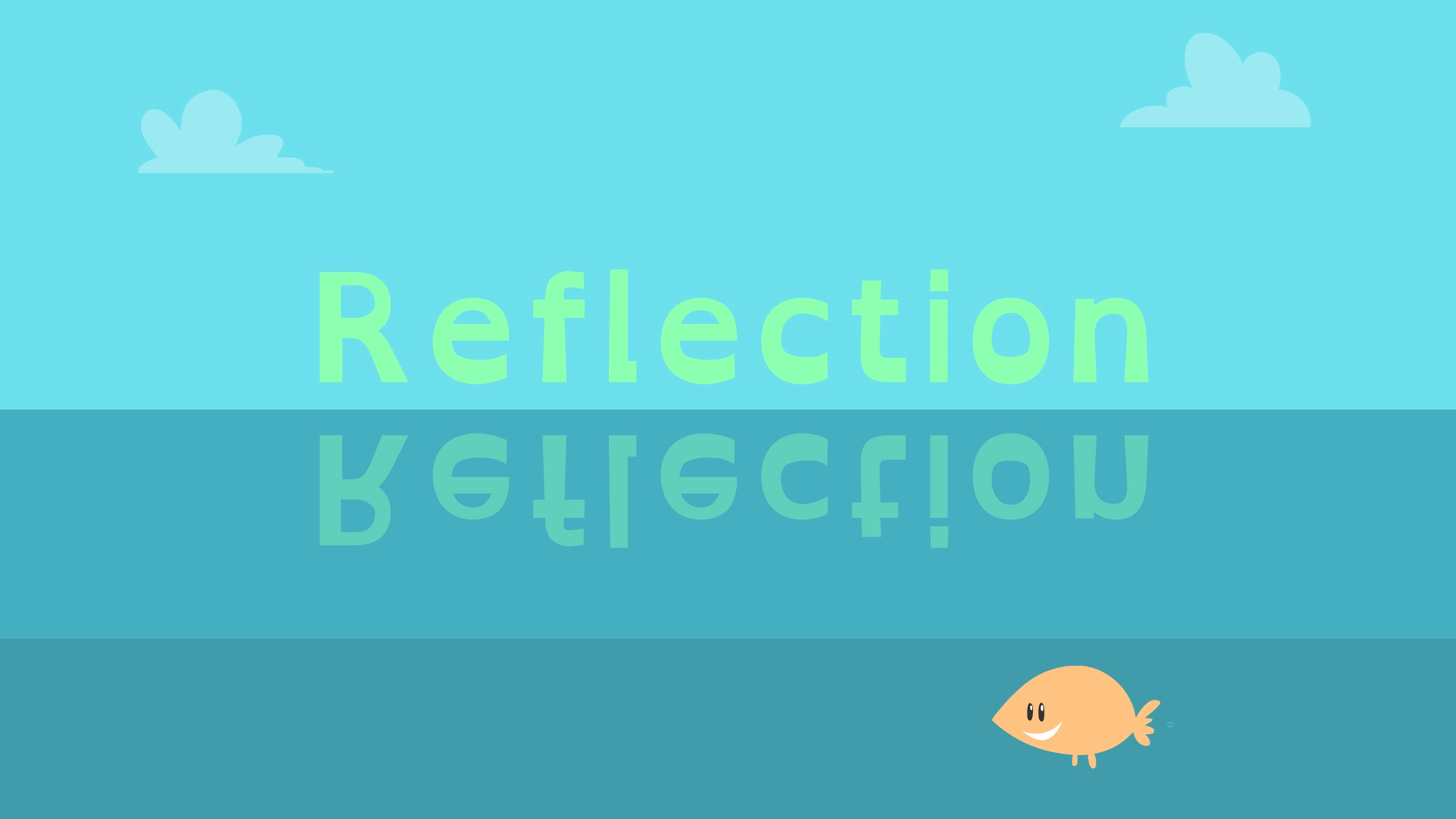
This Math Shorts episode explains the term “reflection”, and provides several examples that demonstrate the concept.

Please visit the PBS LearningMedia library to access the supplementary learning materials included with this video.

This video was made for the PBS LearningMedia library, thanks to a generous grant from the Corporation for Public Broadcasting. It was produced in collaboration with Utah Education Network.

Common Core State Standards:
CCSS.Math.Cont.8.G.A.4 ( Grade 8 ): Understand that a two-dimensional figure is similar to another if the second can be obtained from the first by a sequence of rotations, reflections, translations, and dilations; given two similar two-dimensional figures, describe a sequence that exhibits the similarity between them.

Client

Utah Education Network

Category

Math Shorts

Share This


May 9, 2016

Translation

  • Posted By : Joshua Gunn/
  • 0 comments /
  • Under :

Translation

This Math Shorts episode explains the term translation, and provides several examples that demonstrate the concept.

Please visit the PBS LearningMedia library to access the supplementary learning materials included with this video.

This video was made for the PBS LearningMedia library, thanks to a generous grant from the Corporation for Public Broadcasting. It was produced in collaboration with Utah Education Network.

Common Core State Standards:
CCSS.Math.Cont.8.G.A.2 ( Grade 8 ): Understand that a two-dimensional figure is congruent to another if the second can be obtained from the first by a sequence of rotations, reflections, and translations; given two congruent figures, describe a sequence that exhibits the congruence between them.

Client

Utah Education Network

Category

Math Shorts

Share This


« First‹ Prev45464748495051Next ›Last »
Latest Entries
  • Coming Soon: A New Original Film January 12,2026
  • Watch Now: The Incredible Story of Two Women Artists Who Defied the Nazis October 15,2025
  • Planet Nutshell + DOGE: The Inside Story April 2,2025
  • 2024 Year in Review December 16,2024
  • Planet Nutshell: A Leader in Healthcare Communication Since 2008 November 20,2024
  • How We're Helping HUD Build Stronger Communities October 30,2024
  • The Unexplored Parts 1&2 Now Streaming (for Free!) on YouTube October 7,2024
  • Behavioral Science Drives Turnout in New Work for The Environmental Voter Project September 23,2024
Copyright 2008-2025 Planet Nutshell, Inc. | Made with in Cambridge, MA | Sustainability Policy
Warning: Created in a facility that produces Nutshells